
Fantasy Baseball 2026: Injury Data Review and Pitcher Injuries to Monitor
Corbin Young examines the 2025 fantasy baseball injury data and the notable pitcher injuries to monitor heading into the 2026 season.

Last year, I wrote about baseball injury data for the FTN Fantasy Baseball Draft Kit. That led me to digging into the injury information as we head into the 2026 fantasy baseball season. We’ll examine the season-long injury data in 2025, plus notable pitchers being drafted within the top 250 in Average Draft Position (ADP) for Draft Champions Leagues on the NFBC plaform. Draft Champions leagues are the 50-round draft-and-hold format with 15 teams. Since this is a beefy one, we might cover notable hitter injuries in a following article.
2025 Season-Long Injury Data
Ankle injuries increased by two percentage points in 2025 over the past two seasons. However, it’s worth noting that we’re dealing with small samples, including 28 ankle injuries in 2025 compared to 13 in 2024. There was a slight downtick in back and calf injuries in 2025. Meanwhile, the most significant increase involved oblique injuries, increasing by nearly twice the rate in 2025.
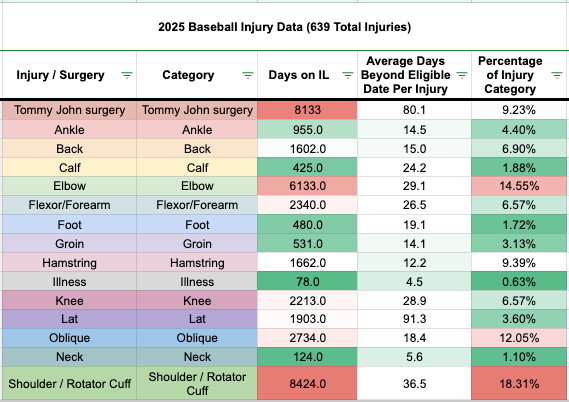
Unsurprisingly, shoulder/rotator cuff, elbow, and oblique injuries were the highest occurrences among all injuries. For context, they were the three injury categories that occurred over 10% of the time in 2025. The recovery timeline from Tommy John surgery, lat, and shoulder/rotator cuff injuries tends to cause players to stay on the injured list over a month beyond their eligible return date.
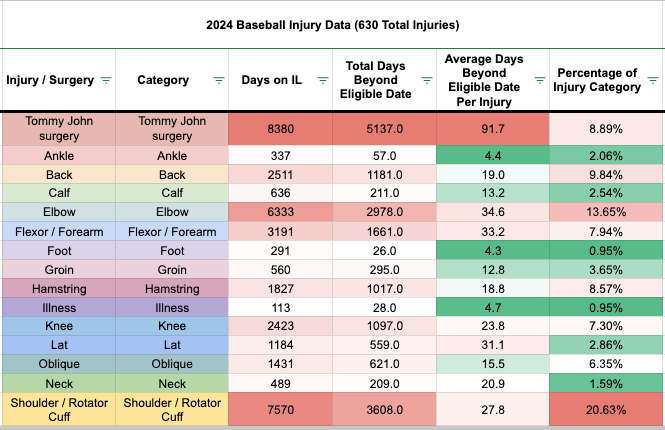
We’ve seen lat injuries tend to cause players to return from their injuries much later than their expected return date. Unsurprisingly, 20 of 21 players with lat injuries in 2025 were pitchers. The most notable were DL Hall, Frankie Montas, Luis Gil, Zach Eflin, Ryan Weathers, and Brandon Woodruff in 2025.
The most common injuries for hitters were ankle (23), back (20), hamstring (43), knee (20), oblique (55), and shoulder/rotator cuff (26). That’s unsurprising because ankles, backs, hamstrings, knees, and obliques play a crucial role in the rotational forces of hitters.
Hitters that landed on the injured list two or more times in 2025:
Adley Rutschman (oblique twice)
Andrew Benintendi (oblique, ankle)
Austin Hays (calf, foot, hamstring)
Brandon Lowe (ankle, foot, oblique)
Corey Seager (hamstring twice)
Dane Myers (oblique twice)
Gustavo Campero (ankle twice)
Ha-Seong Kim (back twice, shoulder/rotator cuff)
Jackson Merrill (ankle, hamstring)
Jake Fraley (calf, oblique, shoulder/rotator cuff)
Jason Heyward (knee, oblique)
Jerar Encarnacion (hamstring, oblique)
Jesse Winker (oblique, back)
Jordan Westburg (ankle, hamstring)
Jorge Soler (back twice)
Luis Robert Jr. (hamstring twice)
Luke Raley (back, oblique)
Mark Canha (elbow, groin)
Masyn Winn (back, knee)
Matt Vierling (shoulder/rotator cuff twice, oblique)
Matt Wallner (hamstring, oblique)
Max Muncy, LAD (knee, oblique)
Miguel Amaya (ankle, oblique)
Mike Tauchman (hamstring twice, knee)
Nolan Gorman (back, hamstring)
Royce Lewis (hamstring twice)
Sam Haggerty (ankle twice)
Seth Brown (elbow, lat)
Taylor Trammell (calf, neck)
Tommy Edman (ankle twice)
Tyler O’Neill (neck, shoulder/rotator cuff)
Wilyer Abreu (calf, oblique)
Wyatt Langford (oblique three times)
Most of those players were and will be fantasy relevant for 2026 fantasy baseball leagues. While this is a small sample of one season, it helps provide context for those with multiple injury stints in 2025.
Players Who Ended September 2025 Injured
Brett Baty (late-September oblique)
José Berríos (late-September elbow)
Jeremy Peña (late-September oblique)
Wyatt Langford (late-September oblique)
MacKenzie Gore (late-September ankle)
Zack Gelof (late-September shoulder/rotator cuff)
Robert Stephenson (late-September, elbow)
Pablo López (late-September, flexor/forearm)
Chris Bassitt (mid-September, back)
José Soriano (mid-September, flexor/forearm)
Brandon Woodruff (mid-September, lat)
Matt Wallner (mid-September, oblique)
Willson Contreras (mid-September, shoulder/rotator cuff)
Yordan Alvarez (mid-September, ankle)
Sawyer Gipson-Long (September, neck)
Reid Detmers (September, elbow)
Masyn Winn (September, knee)
Chase Dollander (September, knee)
Trea Turner (September, hamstring)
Daniel Palencia (September, shoulder/rotator cuff)
Bo Bichette (September, knee)
Dustin May (September, elbow)
Kyle Tucker (September, calf)
Lourdes Gurriel Jr. (September, ankle)
Pitcher Injuries Within the Top 250 in ADP
Spencer Schwellenbach, SP, ATL
NFBC ADP: 79.4 (Since December 15)
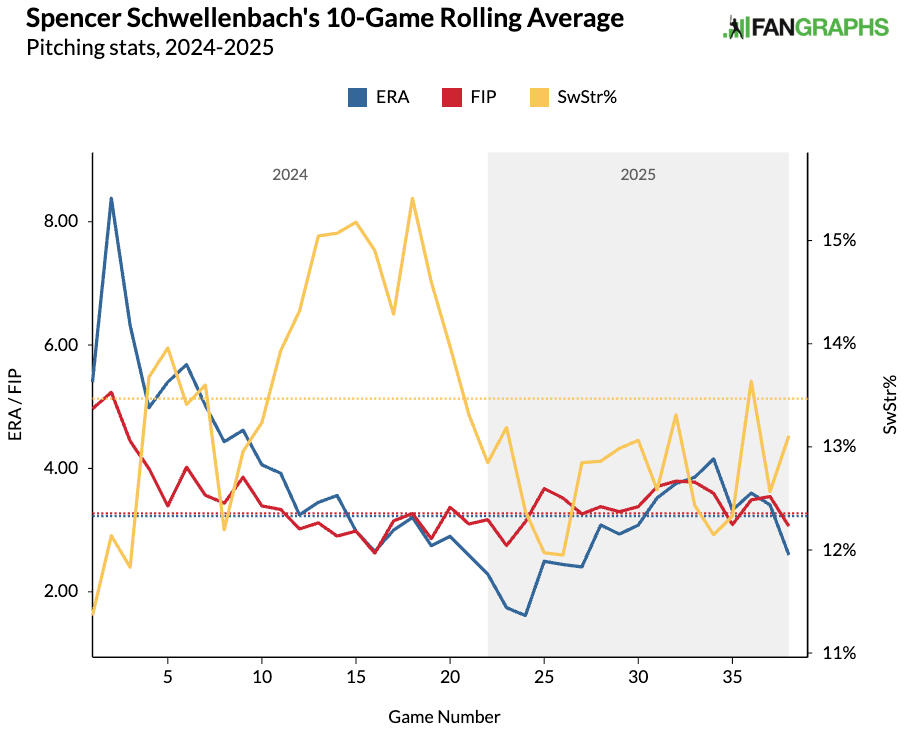
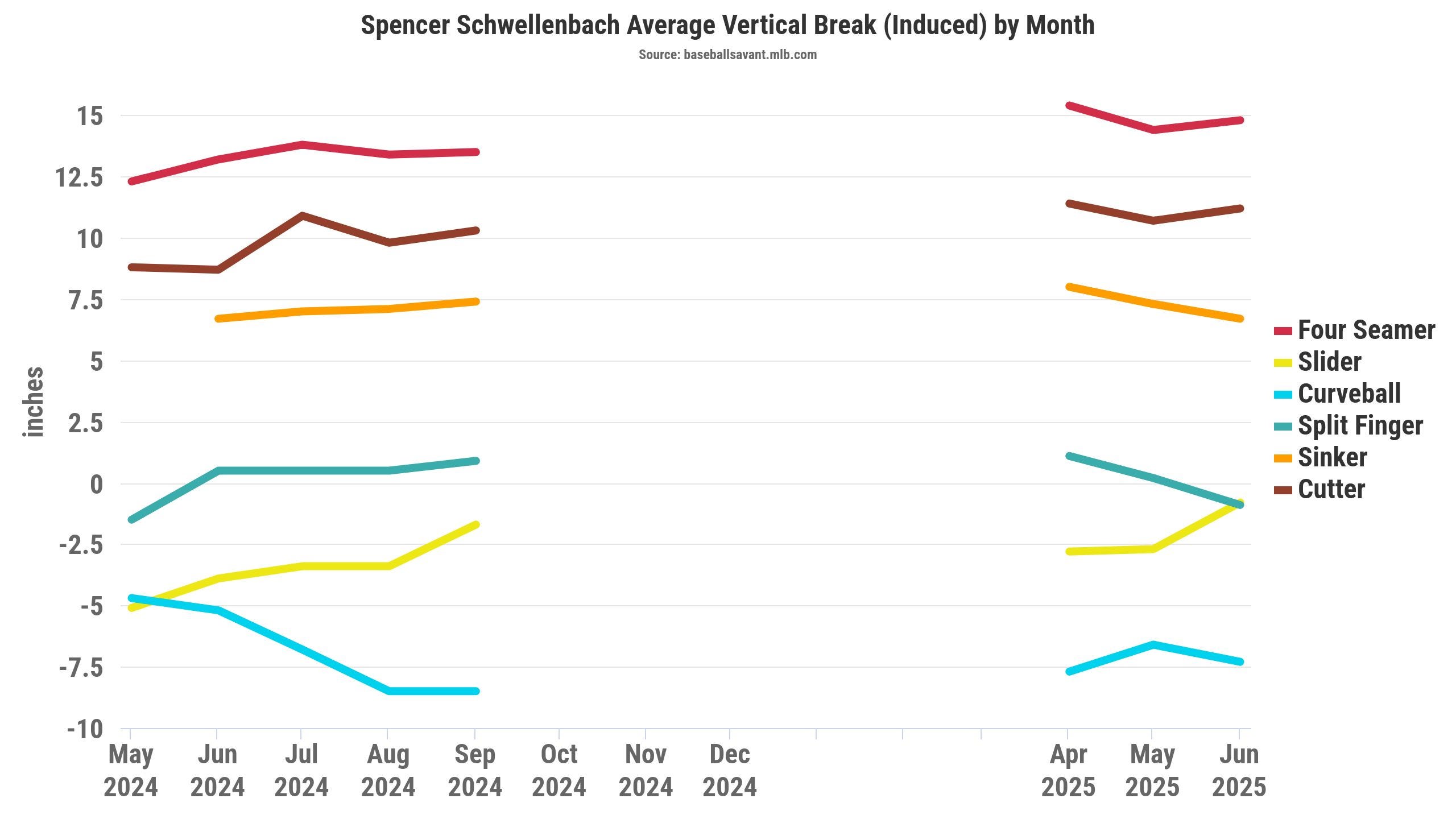
Schwellenbach suffered a fractured elbow in early July, which ended his 2025 season. He followed up his solid 2024 season, with strong numbers in 2025. That’s evident in Schwellenbach’s 3.09 ERA (3.17 xERA), 20% K-BB%, 31% ball rate, and a 13.8% swinging-strike rate in 2025. The rolling graph below over the past two seasons shows Schwellenbach’s swinging-strike rates falling below the 2024 peaks for most of the 2025 season. However, Schwellenbach still showed above-average skills, so don’t overreact.
Schwellenbach’s arm angle raised by over two degrees in 2025. However, it’s worth noting that Schwellenbach’s horizontal release point shifted over five inches closer to his midline while maintaining his vertical release point. That led to Schwellenbach gaining over two inches of extension in 2025, as seen below.
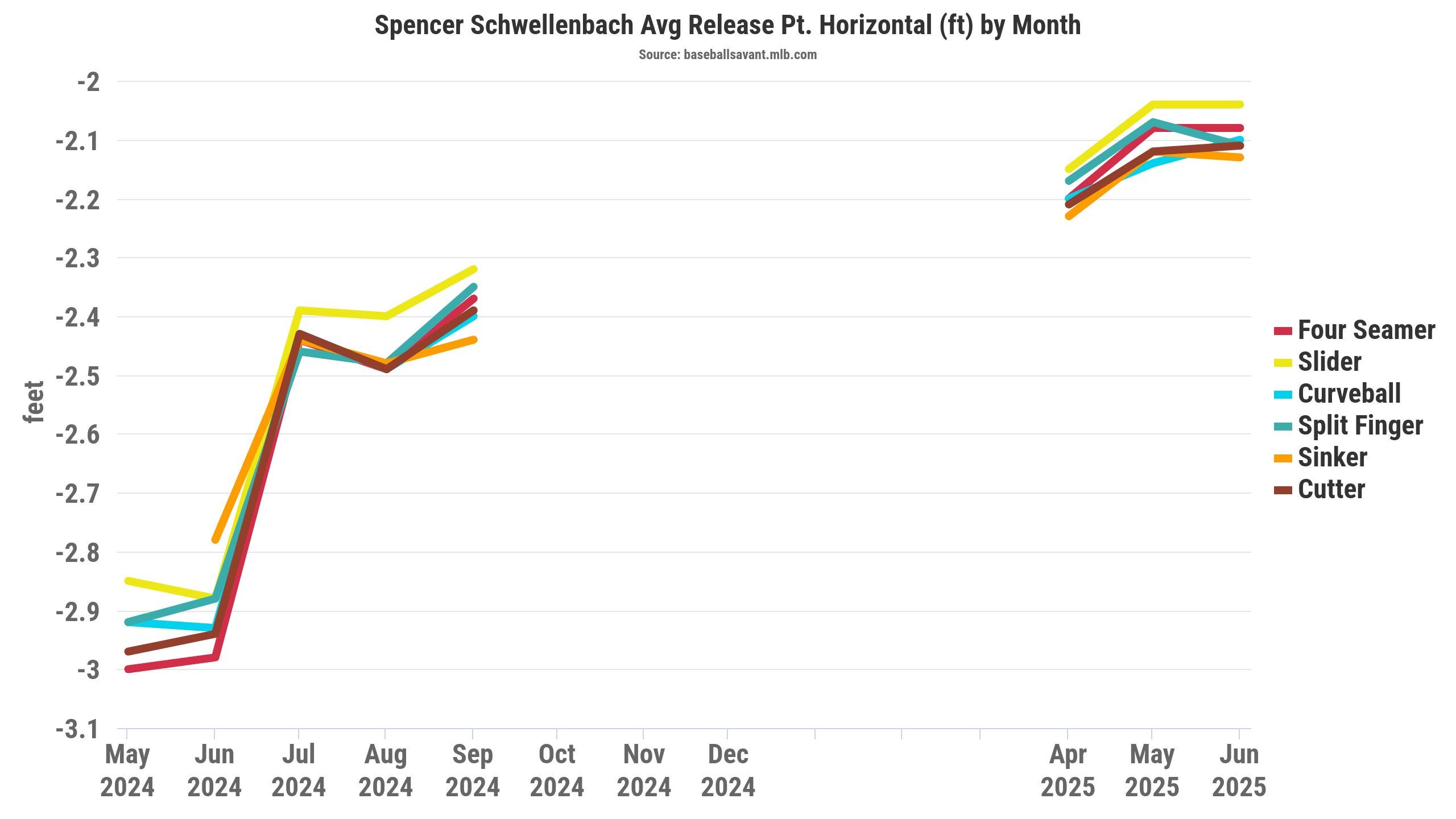
With Schwellenbach’s horizontal release point changes, it coincided with his slider losing over an inch of glove-side movement and gaining nearly 1.5 inches of induced vertical break for the four-seamer. We could also speculate on Schwellenbach’s elbow fracture being somewhat related to the horizontal release point changes in 2025.
There haven’t been many fractured elbows, with less than a handful documented over the past five seasons. The recovery range has been three to six months, though it’s murky when a player misses the rest of the season and into the following season like Schwellenbach. The most notable players were Yonny Chrinos (surgery in September 2021), Codi Heuer, Schwellenbach, and James McArthur. Interestingly, Michael King’s fractured elbow wasn’t listed on the FanGraphs injury database.
If we use King as an example since he’s been the most successful starter, he threw 104.2 innings in 2023 after the news of his fractured elbow in July 2022. King pitched with the Yankees as a reliever for most of the 2023 season, before throwing five or more innings in his four out of his final six outings. Then King threw 173.2 innings in 2024 with the Padres.
Though Schwellenbach has been a starter, throwing over 110 innings in the past two years, there’s a good chance he could be healthy and throw 150+ in 2026. I would advise being cautious with Schwellenbach as an SP1 candidate, given the cost.
Spencer Strider, SP, ATL
NFBC ADP: 97.8 (Since December 15)
Strider made one start in April, then missed nearly one month with a hamstring injury. After Strider returned in May from his hamstring injury, he finished the season healthy. However, the results weren’t like 2022 or 2023. Strider threw 125 innings, with a 4.45 ERA (4.22 xERA), 1.40 WHIP, 14% K-BB%, 38% ball rate, and a 14.1% swinging-strike rate in 2025. For context, Strider’s K-BB% was 10 percentage points below his career average (24%), with the swinging-strike rate nearly three points under the career norm (17%).
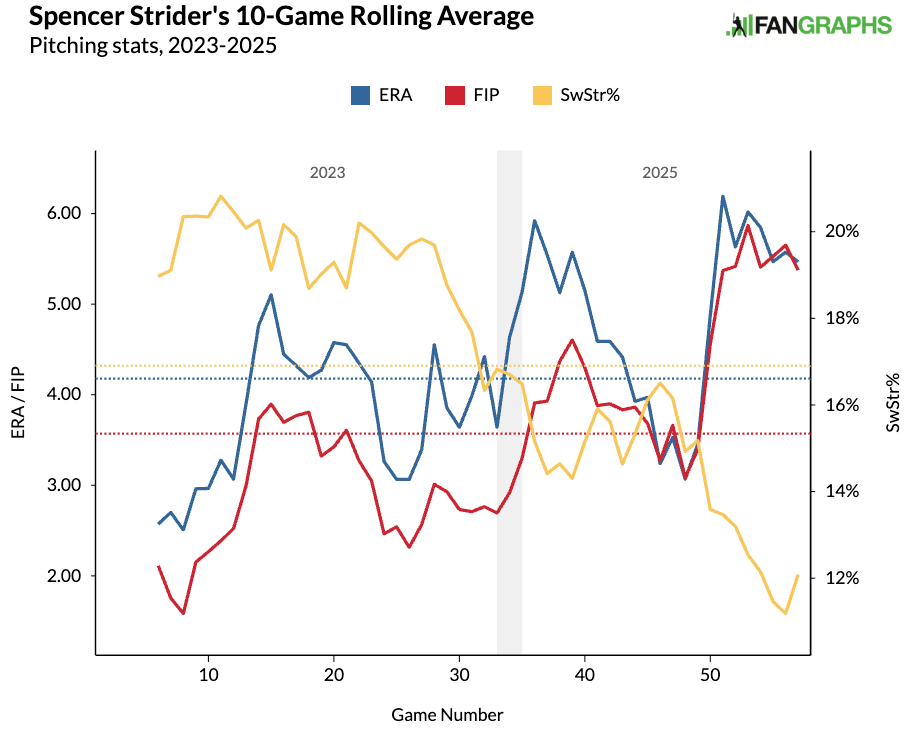
Meanwhile, Strider’s ball rate was four percentage points above his career average, which typically isn’t a fruitful combination to have worse control and fewer whiffs in 2025. The overall skills declined for Strider, with the results putting a sour taste in the mouths of fantasy managers heading into 2026. In 2025, Strider’s arm angle fell to a career low (42.5 degrees), mainly because his horizontal release point came over four inches closer to his midline in 2025.
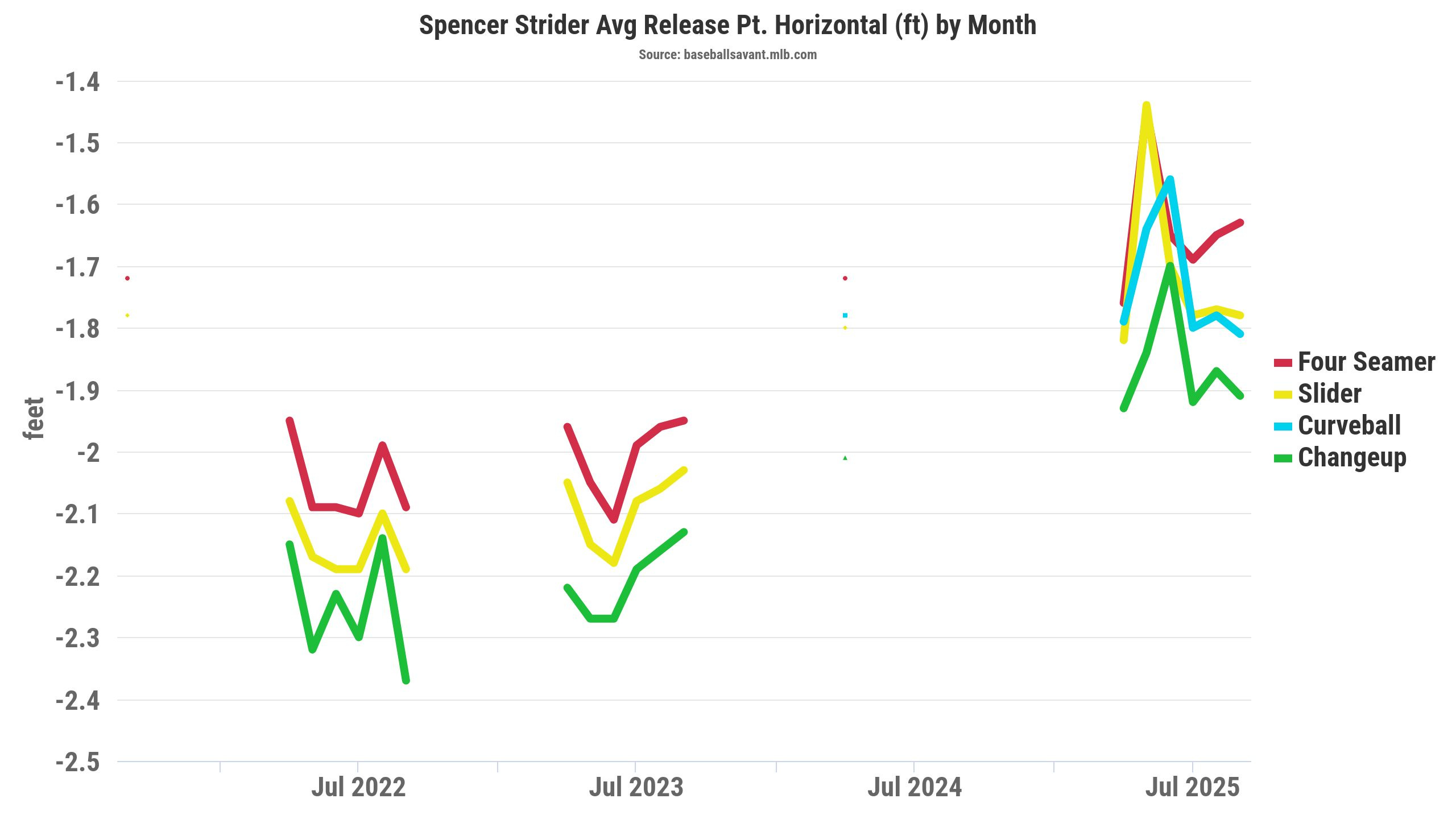
We also saw Strider’s pitch velocity across the board fall, though that’s somewhat expected from a significant injury. That coincides with Strider’s four-seam induced vertical break falling to a mediocre range (16.4 inches) after hovering around 18 inches (2022-2023). Strider can be successful against right-handed hitters, with his four-seam, slider, and curveball. However, the question remains whether Strider finds consistency via the changeup and another pitcher versus left-handed hitters.
Where Strider has been drafted in Draft Champions formats, tends to involve risk, especially among the pitchers. Strider goes near Tyler Glasnow, Nolan McLean, Brandon Woodruff, and Chase Burns. Besides Woodruff and Strider, none of them have thrown 150 or more innings in the majors. This could be the cheapest price on Strider in a while, with the potential for a bounce back in 2026.
Brandon Woodruff, SP, MIL
NFBC ADP: 115.3 (Since December 15)
Woodruff has been on quite a journey. He underwent surgery in October 2023 on his throwing arm for the anterior capsule. The average timeline to return from this surgery was around 16 months for elite baseball players, according to a 2023 Study. It’s worth noting that the sample remains small, but that provides a rough timeline for other players, especially pitchers, who rely on throwing for their profession.
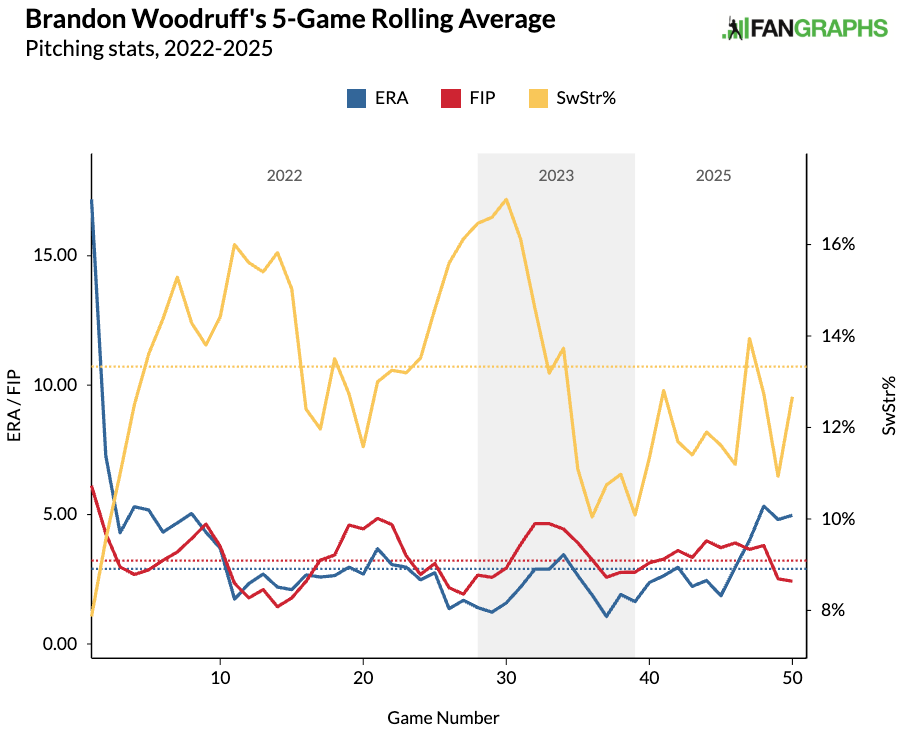
Woodruff returned in July after missing the entire 2024 season. He pitched relatively well across 12 starts (64.2 innings), with a 3.20 ERA (3.17 FIP), 26.8% K-BB%, 31.1% ball rate, and a 12.2% swinging-strike rate. Unfortunately, Woodruff landed back on the injured list with a lat injury, ending his season. A reminder that on average, lat injuries cause players spend more than 91 days on the IL, beyond their eligible return date.
The Brewers gave Woodruff a one-year, $22.05 million qualifying offer in November, suggesting some optimism around his health and availability in 2026. Unsurprisingly, Woodruff’s velocities were down significantly across the board after not pitching in the majors for nearly two seasons, as seen below.
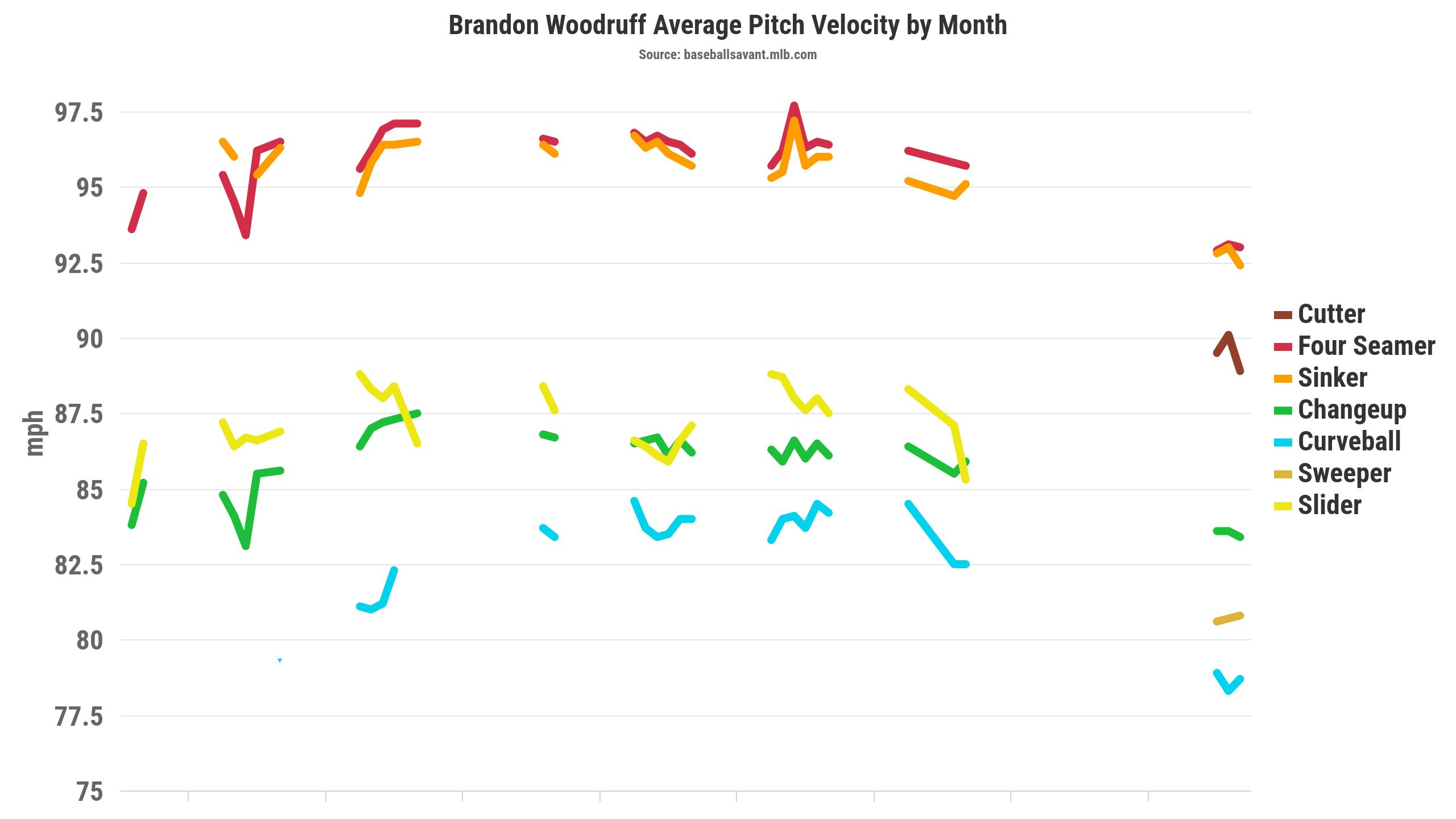
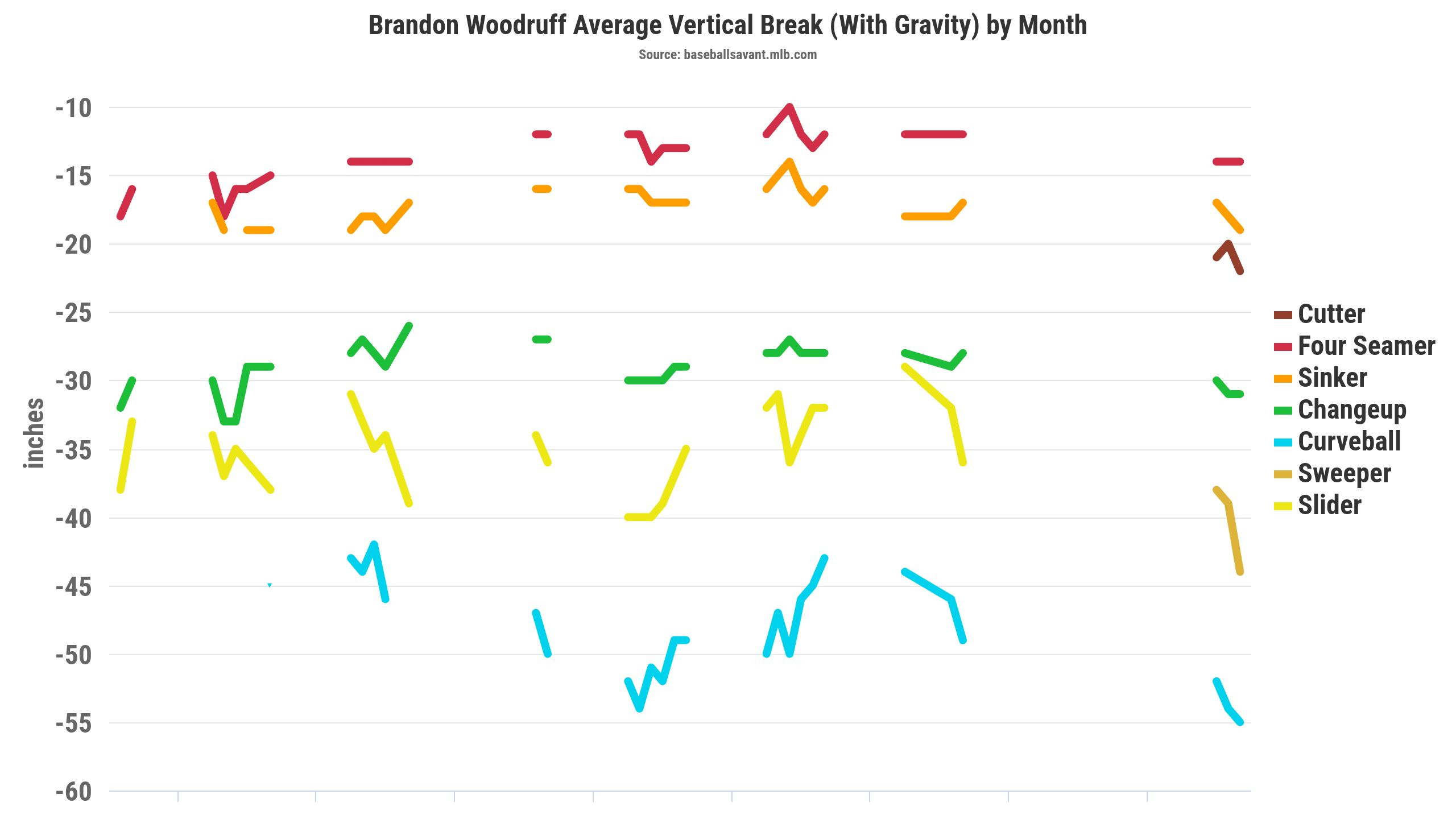
Woodruff added a cutter in 2025, throwing it to both sides of the plate. He used the cutter 20% of the time against righties, which could be a classification issue since he threw the slider around 18-19% in previous seasons. It’s a small sample of 152 cutters thrown, but it looks like a different pitcher than his old slider. There’s a difference of about 11-12 inches in downward movement for the cutter (21 inches), plus 1-2 inches less glove-side movement.
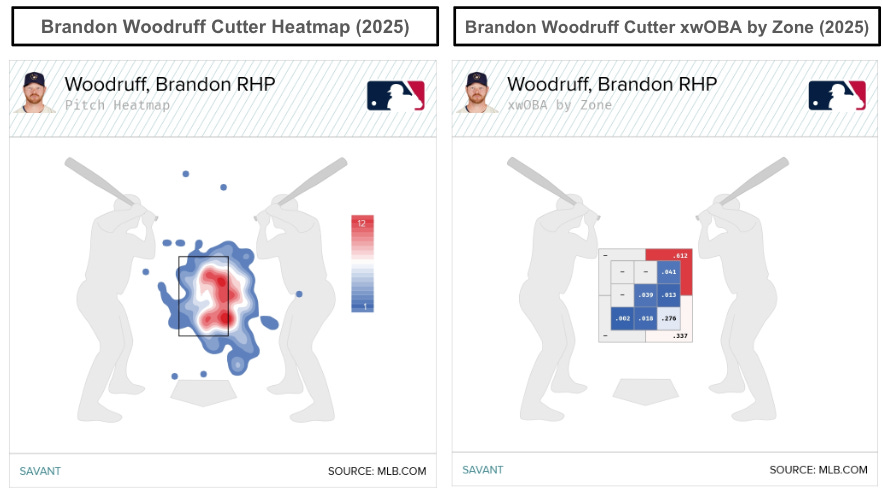
On top of that, Woodruff’s new cutter has been thrown harder at 89.5 mph than his previous slider (~86 mph). Woodruff located the cutter toward the outside of the plate against right-handed hitters, with the potential to jam lefties. We should see more of the cutter in 2026, although the results and locations have been limited to a small sample.
Monitor health, especially any reports about the injury to his lat, since that could linger into the off-season. Woodruff’s early ADP might be a bit high with some injury optimism.
Pablo López, SP, MIN
NFBC ADP: 138 (Since December 15)
López threw the fewest innings (75.2) since the 2020 season after 32 starts in three straight (2022-2024). He missed three months with a strained shoulder and two weeks with a hamstring injury in 2025. Then López closed the season with a forearm strain, though the late-season report states no damage to his elbow or ulnar collateral ligament (UCL). That’s a concerning list of injuries in 2025, which could arise again in 2026.
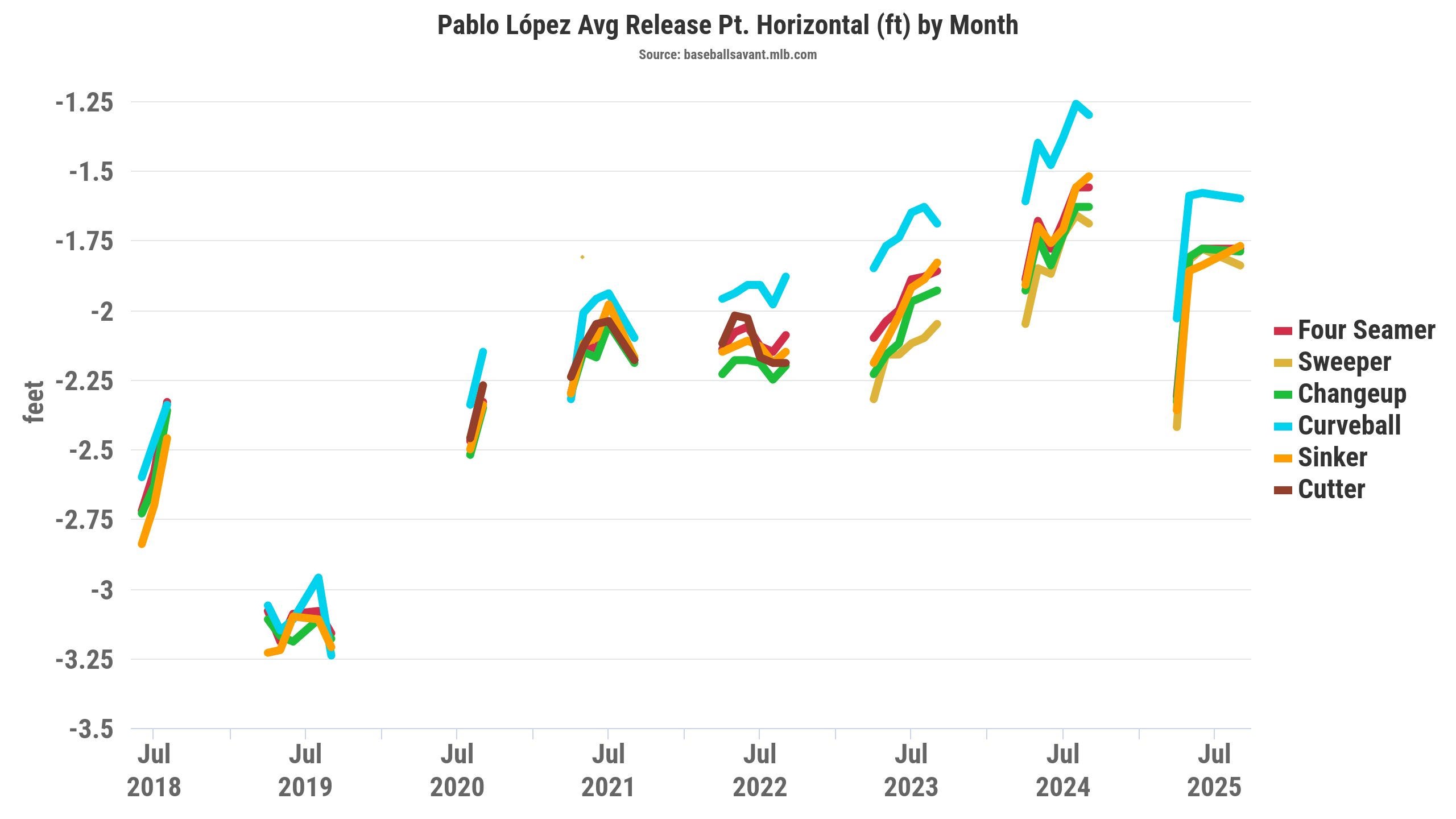
Sometimes, we want to examine a player’s release points and arm angle before and after the injuries. In March and April, López’s horizontal release point was the widest of any month throughout the past two seasons. López’s horizontal release point was over 2.3 away from his midline. That’s more than a six-inch difference from the rest of the season.
López dealt with a hamstring injury early in the season (April). Meanwhile, López’s shoulder and forearm injuries occurred throughout the summer and in September. From a season-long standpoint, López’s arm angle fell by three degrees in 2025 (35 degrees). The only significant pitch movement profile changes came via the sinker moving one inch more toward his arm side and the changeup losing two inches of arm-side fade.
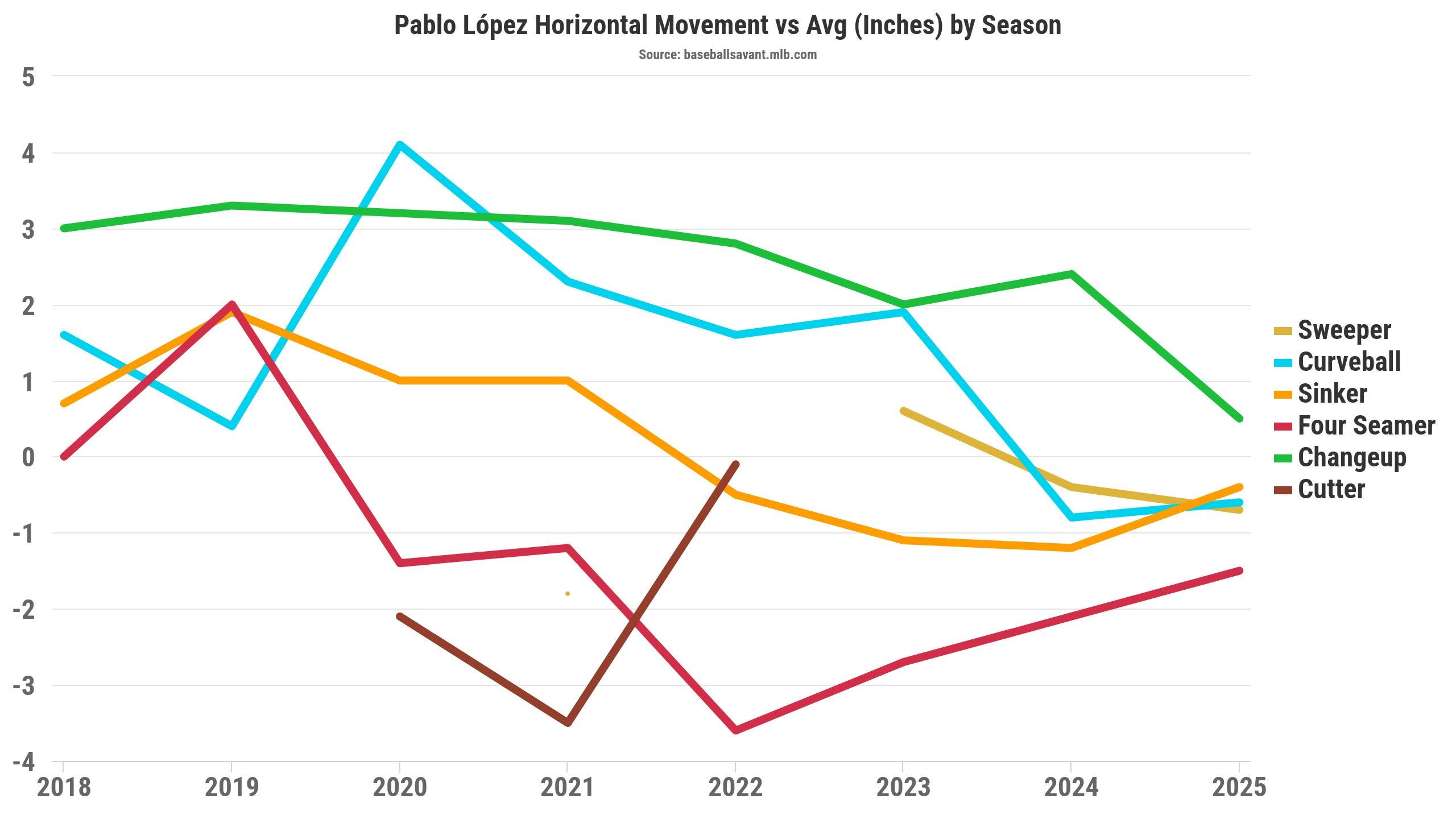
The downward movement on López’s changeup bounced back in 2025 (~32-33 inches) after dipping to 28.3 inches in 2024, the lowest in his career. This feels like a discounted price for López in drafts, compared to recent seasons. Assuming little injury pessimism in the spring, we’ll want to buy back in 2026.
Nathan Eovaldi, SP, TEX
NFBC ADP: 154.2 (Since December 15)
In late May, Eovaldi missed one month with a triceps injury, then a rotator cuff injury in late August caused him to miss the rest of the 2025 season. In October, Eovaldi had a sports hernia surgery, which typically takes 6-12 weeks to return. Theoretically, Eovaldi should be healthy entering the 2026 season. Eovaldi was cruising with a 1.73 ERA (2.96 xERA) across 130 innings in 2025. The skills continue to look above average, entering his 15th season.
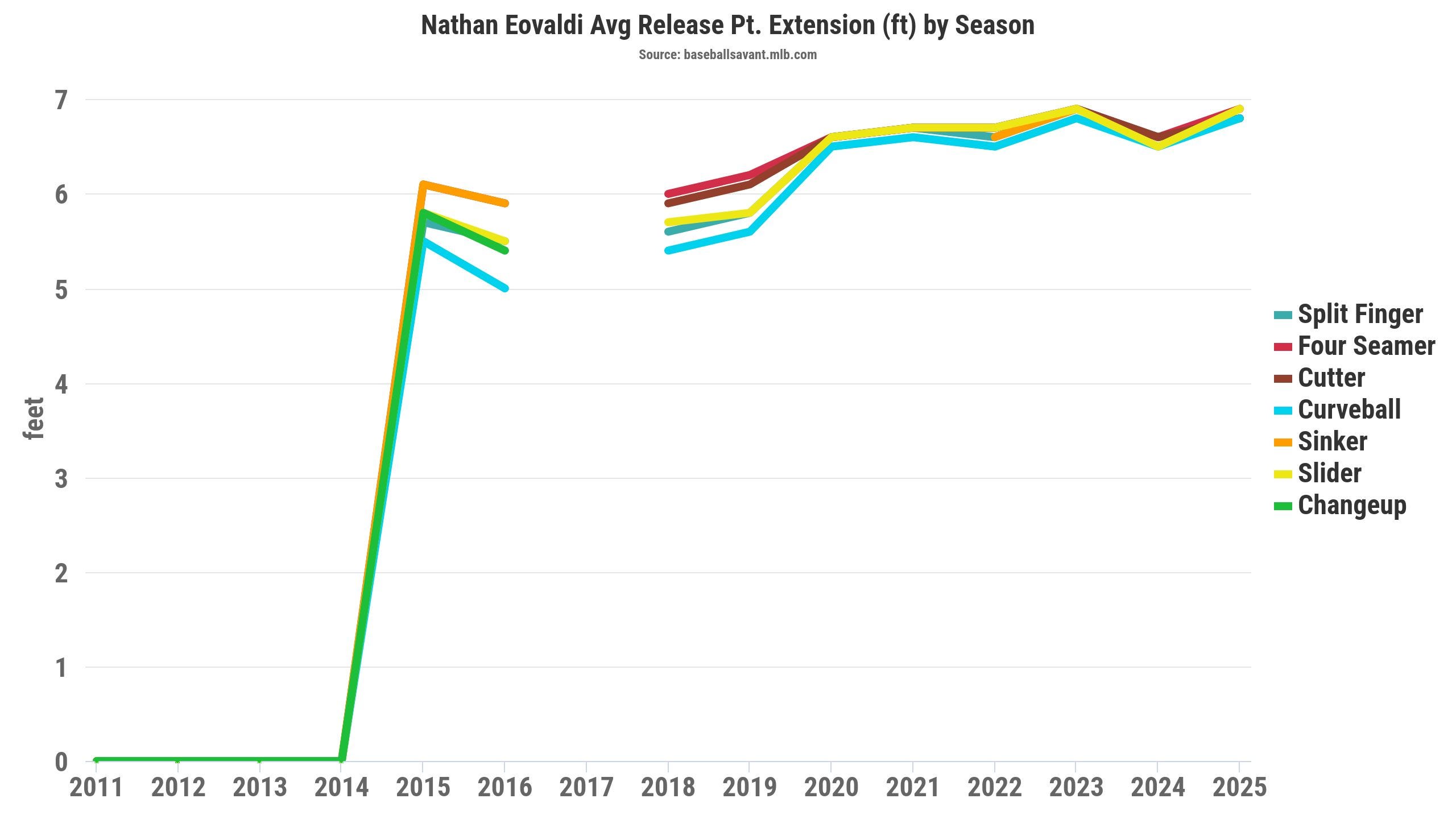
The only notable change for Eovaldi in 2025 involved maintaining his release points and arm angle. However, he increased his extension in 2025 back to 2023 levels. That’s about a 2-3 inch difference in extension during 2025, compared to 2024. It’s probably more of an interesting change, rather than an actionable insight. That’s especially since we’ve seen Eovaldi’s velocity decline across all pitch types, losing 1.5 mph overall in 2025.
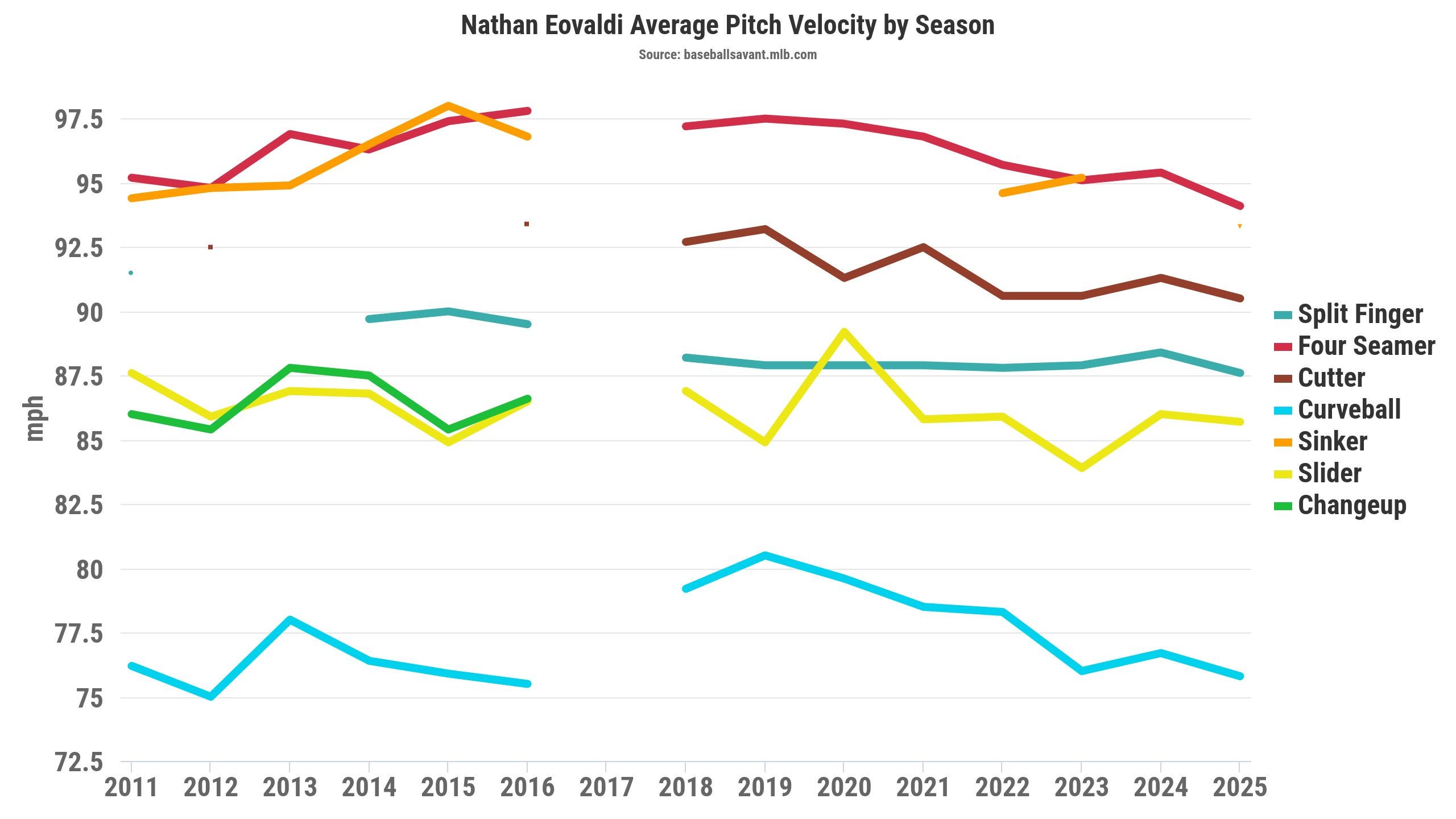
Use the previous two seasons as a baseline projection, 3.60 to 3.80 ERA, around a 1.10 to 1.15 WHIP, and strong strikeout skills.
Kris Bubic, SP, KC
NFBC ADP: 213.5 (Since December 15)
Bubic was one of my breakout starting pitcher options heading into 2025 because of the changes in skills and underlying metrics in the previous season. I wrote about Bubic once in the American League breakout pitcher article. Bubic was cruising into late July, before missing the rest of the season with a left rotator cuff strain.
He had a 2.55 ERA (3.65 xERA), 33% ball rate, and 13.5% swinging-strike rate in 116 innings across 20 starts. Bubic was cleared to start throwing in November. However, we know shoulder injuries typically cause players to miss over one month more past their eligible to return date. We could speculate that throwing harder as a starting pitcher could’ve contributed to the shoulder issues.
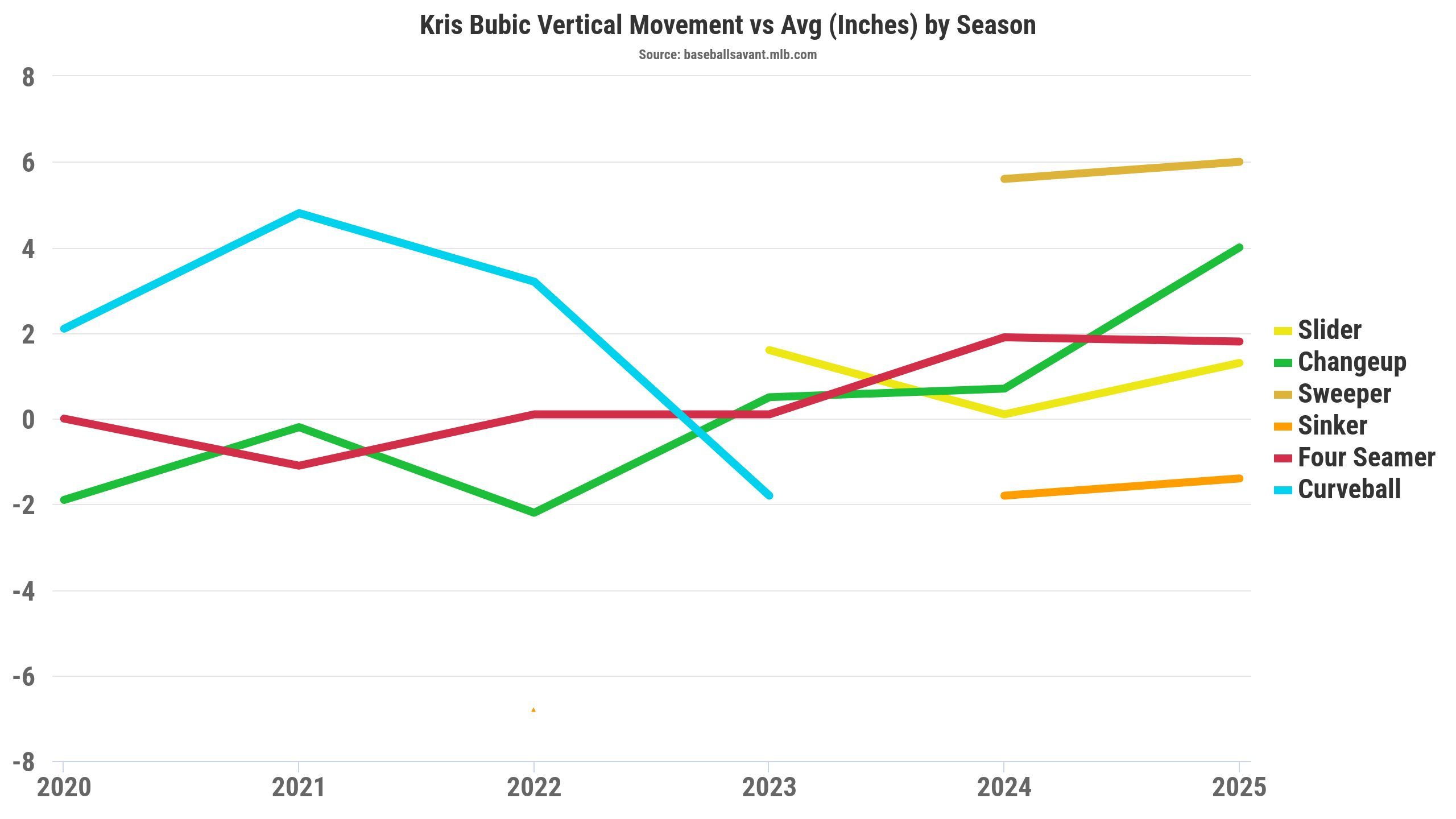
Bubic used a lower arm angle by 2-3 degrees and maintained the induced vertical break gains on his four-seamer. Bubic’s sweeper added an inch or more of drop and sweep, plus the changeup being a deadly option against right-handed hitters. That gives Bubic a wide arsenal to build upon 2025 if healthy. With the discounted price past pick 200, Bubic should be worth the gamble with those improved skills and pitch-level metrics across the board.